
Uncategorized
Living Will vs. Advance Directive: Stop the Family Guesswork
Dec
Introduction: Why Your Family Shouldn’t Have to Play “Guess Who?”
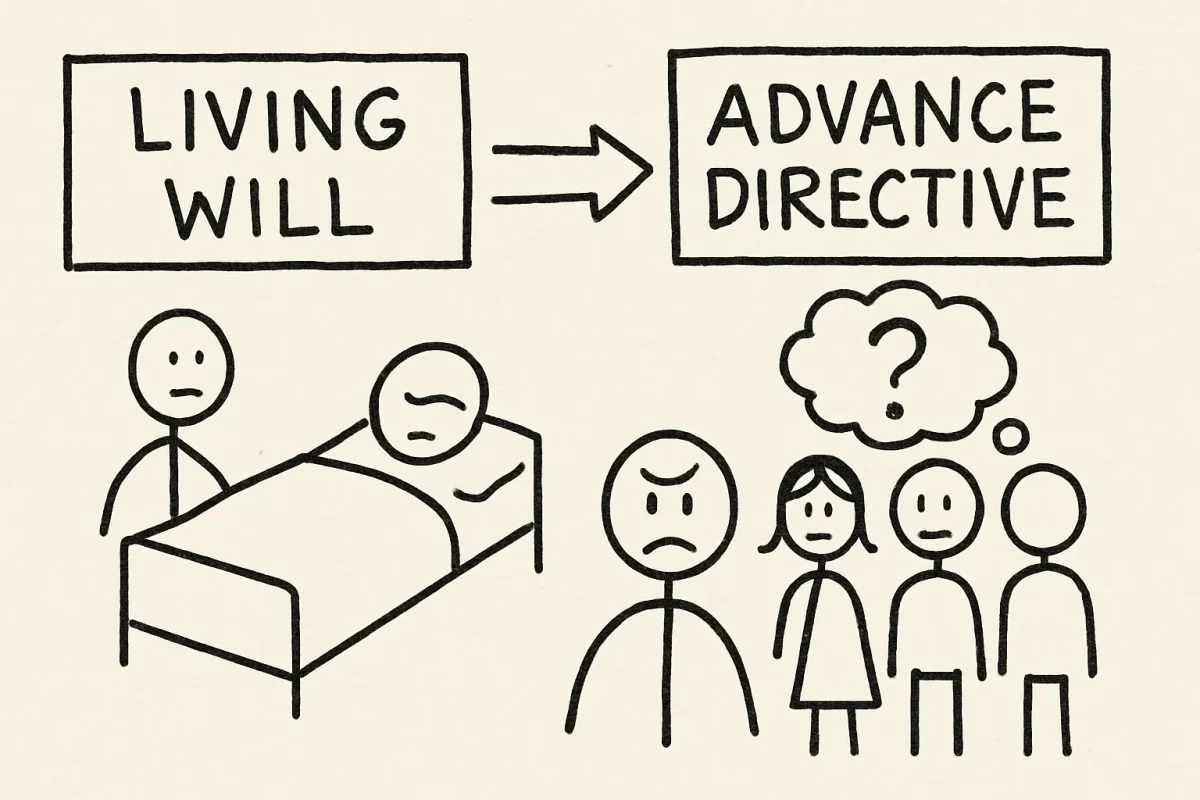
It was a Wednesday evening when the Johnson family gathered around the kitchen table—not for Grandma Rose’s legendary apple pie, but to fend off tears and tension. She’d suffered a sudden stroke, and her carefully folded Advance Directive was nowhere to be found. Aunt Marcy insisted, “Mom told me she never wanted to be hooked up to machines.” Uncle Dave countered, “But last Thanksgiving she said she’d fight for every extra day.” Cousins, siblings, and neighbors all chimed in. The room went quiet except for ragged sobs. No one truly knew what Rose wanted in her final chapter.
Let’s be honest: no one signs up for family drama at the hospital bedside. Yet without clear, legally binding instructions—a living will, an advance directive—your loved ones are left guessing. The emotional toll? Guilt that you didn’t try hard enough. Conflict that fractures relationships. Sleepless nights replaying every choice. Does this sound familiar? Or maybe you’re thinking, “That won’t be me. I’m young and healthy.”
Here’s a secret: accidents and illnesses don’t care about age or timing. They show up unannounced. But you can preempt the panic. You can spare everyone the anguish of second-guessing. And it starts with two documents: your living will and your advance directive.
Meet EUTHAEND—your discreet, expert partner in end-of-life planning. We combine pharmaceutical-grade quality, secure global shipping, and compassionate, confidential consultations to empower you with autonomy and peace of mind. No family guesswork. Just clarity, comfort, and control. If you’re new here, check out our Hello world! post for a quick orientation to our mission.
1. Living Will 101: Your Medical “If… Then” Blueprint
Think of a living will as your “if… then” playbook for dire medical scenarios. It says: If I’m terminally ill or permanently unconscious, then do this (or don’t). It’s that simple, yet profoundly impactful.
Here’s what a living will covers:
- Resuscitation preferences (CPR: yes or no?).
- Mechanical ventilation (breathing machines).
- Feeding tubes and IV fluids.
- Dialysis, antibiotics, and other life-sustaining treatments.
- Pain management versus comfort-only care.
Why is it so vital? Imagine you’re in a coma after a car accident. You can’t speak. Your family stands by a cold, beeping machine. They’re terrified of making the wrong choice. Your living will cuts through the uncertainty. It’s your voice when you can’t talk, your advocate when you’re trapped in silence.
You might be thinking, “Do I really need one if I’m healthy?” The answer is a resounding yes. Life is unpredictable. A stroke, a sudden infection, a freak accident—none of us plan for those moments. A living will isn’t for pessimists; it’s for realists who want to take responsibility for their own story.
Pro tip: Keep it laser-focused. Don’t muddy the waters with scenarios you wouldn’t consider “end-of-life.” Stick to terminal or irreversible conditions. Crisp, clear, and concise wins every time.
2. Advance Directive Unpacked: The Swiss Army Knife of Planning
While a living will focuses on specific treatments, an advance directive is the umbrella document that bundles everything together. Picture a Swiss Army knife: your living will is one blade, and an advance directive is the entire toolkit.
An advance directive typically includes:
- Your living will detailing treatment preferences.
- Durable power of attorney for healthcare (healthcare proxy): who makes decisions when you can’t.
- Optional psychiatric directives for mental health crises.
- Do Not Resuscitate (DNR) orders if you prefer no CPR.
Why the fancy name? Because it truly covers more bases. It kicks in if you’re incapacitated by dementia, a severe injury, or any condition that strips away your decision-making. It says: here’s my plan, and here’s who speaks for me when new questions arise.
One quick note: an advance directive doesn’t handle financial assets. That’s the realm of your last will and testament, trusts, and estate planning. Today, let’s keep the focus on your healthcare choices.
3. Living Will vs. Advance Directive: Demystifying the Differences
At this point, you might be wondering: “So which one do I need?” The reality is—you often need both. But before we talk kits and combos, let’s break down their key differences.
| Feature | Living Will | Advance Directive |
|---|---|---|
| Scope | Narrow: end-of-life only (terminal illness, permanent unconsciousness). | Broad: any incapacity needing medical decisions. |
| Activation | Triggers only in terminal or irreversible states. | Applies when you can’t communicate, regardless of prognosis. |
| Decision-Maker | Your written instructions alone. | Your instructions + appointed proxy. |
| Flexibility | One standard form. | Mix-and-match forms for varied situations. |
In plain English: a living will says “do this”. An advance directive says “do this and here’s who speaks for me if I can’t.”
For more details on living wills versus advance directives, refer to this comprehensive guide.
4. The Dynamic Duo: Why You Need Both Documents
Think of your living will as the script and your healthcare proxy as the director. One sets the stage. The other calls the shots when improv is required.
Case in point: Sarah, a 72-year-old retiree, had a living will that refused mechanical ventilation in a permanent coma. Fine. But when Sarah suffered a traumatic brain injury that left her confused—but not comatose—her doctors weren’t sure what “terminal” meant in her case. Her daughter, Emily, stepped in. Because Sarah also had an advance directive naming Emily as her proxy, Emily could discuss Sarah’s nuanced wishes with the care team, balancing life-extending tests against comfort-focused goals.
Without that proxy, Emily would have faced the same “guess who” fiasco. Together, the documents delivered clarity AND compassion.
Reader exercise: Grab a piece of paper. Draw three columns: Scenario, Do I need to say yes/no?, Who decides? List your top 5 worst-case medical scenarios. Use this map to shape both your living will and your advance directive.
5. How to Draft Your Living Will (Lawyer Not Required!)
You don’t need a legal degree or a big retainer. Just these six steps.
- Confirm eligibility: You must be 18+ (19 in some states) and of sound mind.
- Get the right form: Download your state’s form from AARP, CaringInfo, or via our state-by-state forms resource.
- Detail your preferences: Use clear, specific language. “No feeding tube” is better than “avoid aggressive measures.”
- Sign properly: Follow witness or notary rules precisely.
- Distribute copies: Your doctors, agent, family, and personal file all get a copy.
- Review & update: After moves, marriages, diagnoses—make a new form.
Need an example? Check out our sample page for a filled-out template.
Sidebar: State-by-State Cheat Sheet
| Requirement | Example States |
|---|---|
| No Witnesses Required | Alaska |
| 1 Witness | Arizona, Utah |
| 2 Witnesses (one non-relative) | Florida, Texas, Virginia |
| 2 Witnesses or Notary | Kansas, Mississippi |
| No Formal Recognition (use proxy) | Massachusetts, Michigan |
Pro tip: When in doubt, get both witnesses and a notary. It never hurts.
6. Appointing Your Healthcare Proxy: Who, What & How
Your healthcare proxy is the backstage pass to your medical decisions. Choose carefully.
Who to Choose
- Someone calm under pressure.
- A person who shares your values.
- Close enough to be reached in emergencies.
- Willing to carry the emotional load.
What to Discuss
- CPR vs. comfort-only care.
- Ventilation, feeding tubes, dialysis preferences.
- Spiritual, cultural, or quality-of-life boundaries.
How to Make It Official
- Download your state’s healthcare proxy form from the NIA guide on choosing a healthcare proxy.
- Sign with required witnesses or a notary.
- Add a HIPAA release so your agent can access records.
- Name alternate agents in case Plan A is unavailable.
Remember: a proxy who doesn’t know your wishes can’t advocate effectively. Share a copy of your living will with them.
7. Beyond the Basics: POLST, DNR & Other Optional Extras
Want even more control? Consider these additions:
- POLST/MOLST: Medical orders signed by a clinician, covering resuscitation, hospitalization, antibiotics, and more. Portable and binding for EMS teams.
- Out-of-Hospital DNR: Ensures first responders skip CPR if your heart stops outside the hospital.
- Organ & Tissue Donation: Register online with your state registry or Donate Life Network.
- Burial, Cremation & Eco-Options: Document your post-death preferences—green burial, donations to science, traditional services.
These extras layer on top of your living will and advance directive for seamless end-to-end planning.
8. Common Pitfalls & How to Dodge Them
- Procrastination: “I’ll do it someday.” Don’t. Today is that day.
- Unsigned Documents: A form without signatures is decoration only.
- Vague Language: Be as detailed as a GPS. “Administer comfort care only” beats “avoid extraordinary measures.”
- Poor Agent Choice: Comfort in convenience isn’t the same as capability.
- Secrecy: If no one knows about your docs, they can’t follow them.
- Ignoring State Rules: One size doesn’t fit all—check local requirements.
- Failure to Update: Lives change. So do preferences.
9. How EUTHAEND Elevates Your End-of-Life Planning
At EUTHAEND, we understand end-of-life planning can feel overwhelming. That’s why we offer:
- Compassionate Consultations: Tailored guidance on living wills, advance directives, and ancillary orders.
- Expert Quality Assurance: Pharmaceutical-grade compounds tested for purity, and airtight documentation protocols.
- Discreet Global Shipping: Secure, confidential delivery to your door—wherever you are.
- Ongoing Support: Emotional and logistical assistance for you and your loved ones, every step of the way.
- My Account for ongoing support and document access.
We blend legal clarity with medical precision and heartfelt empathy. Your autonomy is our mission.
Next step: Book a confidential session with an EUTHAEND specialist and start your living will advance directive journey today.
10. Your End-of-Life Planning Checklist (Printable!)
- Download & personalize your living will form.
- Complete your healthcare proxy designation.
- Sign with witnesses/notary per state rules.
- Share copies with doctors, agent, and family.
- File originals in a secure, known location.
- Review annually or after major life changes.
Conclusion: You’ve Got This (And They’ve Got You)
End-of-life planning isn’t about morbidity. It’s the ultimate act of care. By drafting both a living will and an advance directive, you gift your future self—and those you love—clarity, companionship, and control. No more guesswork. No more heartache. Just a smooth, dignified path forward.
Your loved ones will breathe easier knowing they’re honoring your authentic wishes. Your future self will thank you for the foresight. And if you need a trusted partner, EUTHAEND is here—discreetly, expertly, compassionately.
Share this guide with someone you care about. Then, when you’re ready, ping EUTHAEND. We’ve got your back. Explore more topics in our Uncategorized blog section. And don’t forget to read our Disclaimer.
