
Uncategorized
Advance Directive: What It Is and How to Secure Yours
Dec
Introduction
Imagine waking up in a hospital room, tubes and monitors humming around you, without the ability to speak for yourself. Your family huddles at the bedside, grappling with impossible questions. In moments like these, uncertainty can feel heavier than gravity. Deciding whether to prolong treatment or let nature take its course can lead to conflict, confusion, and lasting regret.
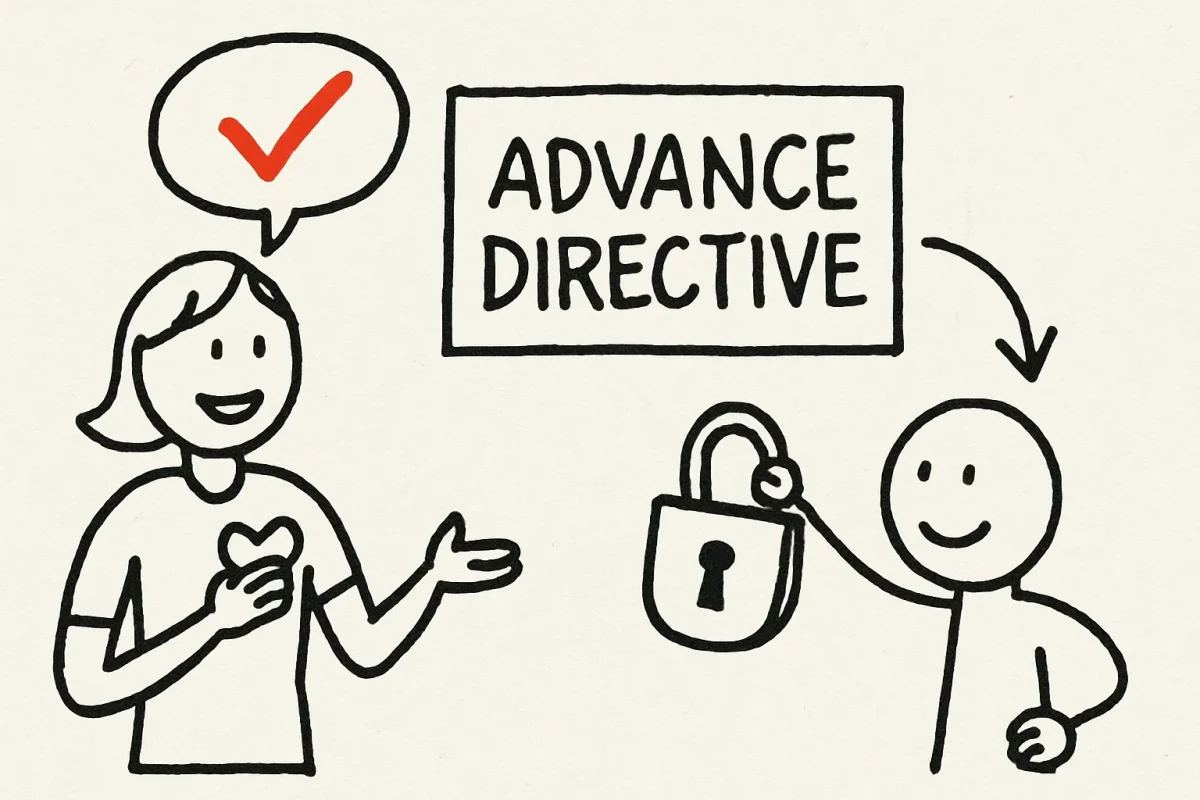
This hidden risk—leaving critical healthcare decisions to chance—underscores the power of an advance directive. Far from being a morbid exercise, creating an advance directive is an act of compassion: for yourself, your loved ones, and the healthcare teams who care for you.
At EUTHAEND, we guide you through every step with expert, compassionate support. Our confidential consultations ensure your voice is honored, even when you can’t speak. Let’s explore how an advance directive can give you back the reins of your care, and how you can secure yours today.
Why Planning Matters: Your Healthcare Safety Net
- Personal autonomy: An advance directive guarantees that your preferences—no matter how nuanced—are recorded and respected.
- Peace of mind: You can rest easy knowing that your values guide care, and your loved ones are spared agonizing guesswork.
- Faster decisions: In emergencies, clear directives reduce delays, prevent conflicts, and allow medical teams to act swiftly.
When you plan ahead, you transform uncertainty into clarity. And when your family knows your wishes, they can focus on support and presence instead of legal battles.
What It Is
The core question of advance directive what is can be answered simply: it’s an advance directive, a legal document recognized under federal and state law that provides written instructions for your healthcare if you become incapacitated.
Key components include:
- Living will: Your written directives on life-sustaining treatments—like resuscitation, mechanical ventilation, or feeding tubes—when you’re terminally ill or permanently unconscious.
- Durable Power of Attorney for Health Care: The appointment of a trusted person (your healthcare proxy) to make decisions on your behalf, acting in your best interest or according to your stated wishes.
An advance directive springs into action when you’re unable to communicate—whether due to surgery, illness, or an unforeseen emergency.
Types of Advance Directives: A Quick Breakdown
Living Will
Offers detailed instructions for life-sustaining treatments if you face a terminal condition or permanent unconsciousness. It’s specific, static, and focused on refusing or accepting certain interventions.
Durable Power of Attorney for Health Care
Designates a healthcare proxy to make real-time decisions across all medical scenarios—even those not covered in your living will. This flexibility complements your written directives.
POLST & DNR Orders
Clinician-signed medical orders—such as Physician Orders for Life-Sustaining Treatment (POLST) or Do Not Resuscitate (DNR)—translate your wishes into binding, portable directives for emergencies.
Psychiatric Directives
Specify mental health treatment preferences, offering clarity in crisis situations and ensuring your psychological care aligns with your values.
Combined State Forms
Several states offer unified forms that merge living will instructions and proxy designation into a single “advance healthcare directive.”
Navigating State-by-State Requirements
Advance directive laws vary widely across the U.S. You’ll encounter differences in:
- Age and capacity: Most states require you to be 18 or older and of sound mind; some allow emancipated minors.
- Execution formalities: Signature alone, two witnesses, notarization, or a combination.
- Pregnancy restrictions: A handful of states nullify directives during pregnancy unless exceptions apply.
- Out-of-state recognition: Many states honor out-of-state directives if they closely match local law.
How to Create Your Advance Directive in 5 Steps
- Draft your document using state-approved language and official forms.
- Choose & brief your healthcare proxy—ensure they understand your values and responsibilities.
- Sign & date with the correct number of witnesses or a notary, per your state’s rules.
- Distribute copies to your doctor, proxy, family members, and any medical facilities you visit.
- Review annually and after major life changes—marriage, birth, diagnosis, or a move.
EUTHAEND’s Role in Your End-of-Life Planning
EUTHAEND combines medical and legal expertise to guide your planning:
- Expert guidance: Tailored advice on federal and state requirements, from form completion to storage.
- Quality assurance: Rigorous compliance checks to verify every signature, witness, and clause.
- Discreet support: Confidential consultations, mirroring the same respect we give our secure global shipping of pharmaceutical-grade compounds.
- Resource library: Ready-to-use templates, interactive checklists, and detailed FAQs.
Client Snapshot
When Maria’s father fell into a coma, his family faced weeks of hospital debates. Thanks to an advance directive drafted with EUTHAEND’s help, they honored his wishes without conflict. Decisions were made swiftly, and the family found solace in honoring the document they had created together.
Beyond the Directive: Best Practices & Tips
- Open conversations: Share your values and choices with family and doctors—transparency ensures everyone is on the same page.
- Digital vs. physical: Store a signed original in your home and upload a digital copy to patient portals like MyChart or state registries.
- Plan updates: Revisit your directive after life events—new diagnosis, marriage, relocation, or the birth of a child.
- Leverage templates: Use EUTHAEND’s curated forms and checklists to streamline the process and avoid common pitfalls.
Next Steps & Resources
Ready to take control? Here are your go-to resources:
- CaringInfo Templates—Free advance directive forms for every state.
- AARP Printable Forms—State-specific guides and legal disclaimers.
- EUTHAEND Resource Hub—Downloadable checklists, glossary, and expert interviews.
- Book your private consultation with an EUTHAEND specialist for personalized support.
Conclusion
Drafting an advance directive is more than paperwork—it’s a gift of clarity, autonomy, and compassion for yourself and those you love. By securing your directives today, you ensure that your healthcare journey aligns with your deepest values, no matter what the future holds.
Take the first step: download your state form, schedule a confidential consultation with EUTHAEND, and regain control of your healthcare destiny.
For more information, view our Privacy policy and Disclaimer.
